
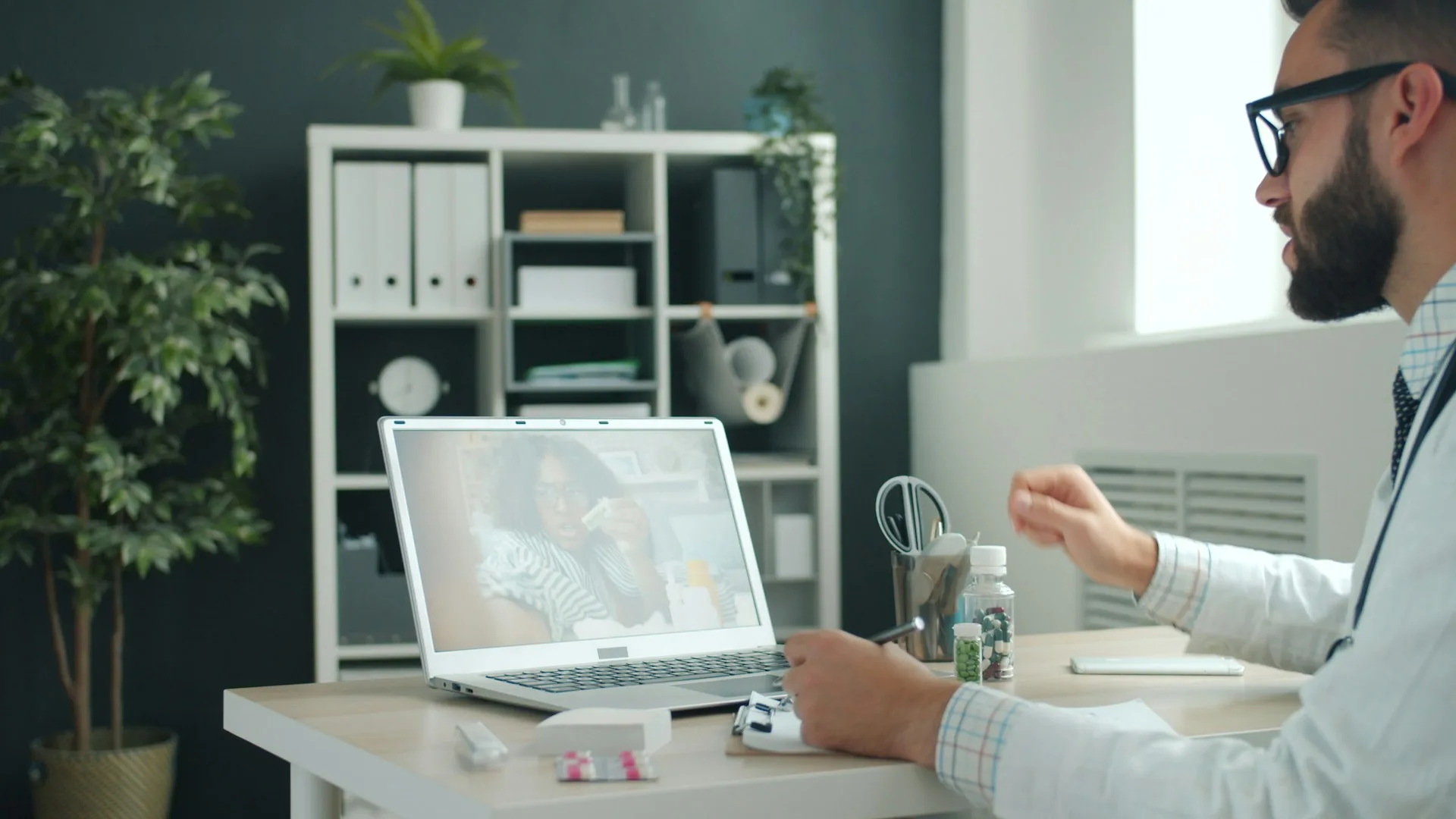
Telemedicine is legal in Singapore, and it is regulated like any other clinic service. Since 26 June 2023, teleconsultation by doctors has been licensed under the Healthcare Services Act (HCSA): the provider needs MOH’s approval for the “Remote” mode of service delivery, its doctors are expected to complete an MOH-specified e-training, and every teleconsultation follows the same rules on assessment, video, MCs and records. This guide covers who needs the licence, how a clinic adds Remote, the e-training, and the rules for every call.
The 30-second version:
Under the HCSA, telemedicine is the “Remote” mode of service delivery (MOSD) on an Outpatient Medical Service licence. The licence sits with whoever provides the medical service: a clinic, a platform company that engages doctors, or a doctor practising in their own capacity. You need MOH approval before you start, but a clinic adding Remote pays no extra fee under the MOSD bundle, and many clinics already hold it from the PHMCA migration. Doctors on Remote should complete MOH’s telemedicine e-training. On each call: real-time video for first-time patients, no MCs or prescriptions from a questionnaire alone, tell the patient who the licensee and the doctor are, and document it in the patient’s record.
Opening a clinic first? Start with the pillar: How to Start a Clinic in Singapore. Official source: MOH Circular No. 87/2024 on telemedicine ↗
Is telemedicine legal in Singapore?
The Healthcare Services Act (HCSA) replaced the old Private Hospitals and Medical Clinics Act (PHMCA) and moved Singapore from premises-based to services-based licensing. When Phase 2 of the HCSA started on 26 June 2023, services that were not licensed under the PHMCA came into the licensing net, including teleconsultation services by doctors or dentists (MOH announcement ↗).
Under the HCSA, providing telemedicine amounts to the remote provision of an Outpatient Medical Service (OMS). So a teleconsultation is not a lighter-touch service: it is your outpatient medical service delivered remotely, and the licensee must ensure every patient is properly assessed and cared for in a proper, effective and safe manner.
Who needs the licence: the clinic, the doctor or the platform?
MOH’s Phase 2 announcement lists who must hold an HCSA licence for teleconsultation:
- Medical or specialist clinics that engage or employ doctors to offer teleconsultation services.
- Telemedicine platform companies that engage or employ doctors to provide teleconsultation services.
- Individual doctors who offer teleconsultation services in their own professional capacity.
The common thread in MOH’s list: each provider either engages or employs doctors, or is the doctor.
MOH’s joint circular on telemedicine makes the same point from the patient’s side. Patients must be clearly informed which licensee (its business name) they are receiving the teleconsultation from, and given the licensee’s contact information, “even if the teleconsultation is conducted on a third-party platform”.
Adding “Remote” to your clinic licence
The HCSA has four modes of service delivery (MOSDs): Permanent Premises (your brick-and-mortar clinic), Temporary Premises (for example, house calls), Conveyances (a vehicle) and Remote (teleconsultations through virtual platforms or applications). Teleconsultation is the Remote MOSD on your Outpatient Medical Service licence. Our start-a-clinic guide covers how the four modes fit together.
What to know before you offer it:
- Approval comes first. Licensees must seek MOH’s approval before commencing services in any MOSD, and MOH takes regulatory action against licensees that provide services outside the modes they were approved for.
- Frequency doesn’t matter. A provider needs the licence as long as it provides the service, regardless of how often it is provided. A handful of teleconsultations a month still needs Remote approval.
- No extra fee for a typical clinic. Outpatient Medical Service has an MOSD fee bundle of Permanent Premises, Remote and/or Temporary Premises. MOH’s example: a medical clinic that also provides telemedicine and/or house calls is eligible for the bundle and pays no additional fees.
- Apply on HALP. Licensees apply for MOSDs on the Healthcare Application and Licensing Portal (HALP), the same portal used for the licence itself.
- You may already have it. Medical clinics previously licensed under the PHMCA were issued HCSA licences that already included the Permanent Premises, Temporary Premises and Remote bundle. Check your current licence on HALP before you apply for anything.
Any later change to your licence, and the renewal cycle that keeps it valid, is covered in our guide to renewing your clinic licence.
The MOH telemedicine e-training
This is the requirement behind searches for an “MOH telemedicine course” or “certificate”.
- Doctors on Remote should complete it. MOH’s HCSA FAQ lists ensuring that the telemedicine e-training as specified by MOH is completed by every doctor providing service via the Remote MOSD as one of the ways licensees keep remote care safe.
- Your CGO must have completed it. HCSA’s requirements to be a Clinical Governance Officer include, for the Remote mode, having completed the telemedicine e-training course as specified by MOH.
- Keep the records. Licensees should keep records of the training for inspection by MOH.
MOH specifies the course, so check the current details with MOH (hcsa.gov.sg ↗) rather than relying on a third-party listing.
The rules for every teleconsultation
MOH’s Joint MOH-HSA-SMC Circular No. 87/2024 sets out the key requirements under the HCSA and the Healthcare Services (Outpatient Medical Service) Regulations 2023, in the order of a consultation.
Before the teleconsultation
- Clinical guidelines on suitability. Put in place guidelines or protocols on when a condition can be managed remotely and which patients suit it. MOH’s examples of what to address: patients who are not suitable (for instance, elderly patients with hearing or speech impairments and no caregiver, or connectivity problems), conditions that cannot be adequately assessed remotely (such as suspected stroke or pneumonia), and medications that should not be prescribed remotely at all, or in certain scenarios (such as controlled drugs and other medicines with addictive potential).
- Alternative arrangements. Where the doctor judges that a condition cannot be managed remotely in a proper, effective and safe manner, the patient or caregiver is given another way to receive care (MOH HCSA FAQ).
- Tell the patient who is treating them. The patient is informed of the name, role and designation of the person providing the service.
During the teleconsultation
- Real-time video for first-time patients. A real-time video consultation is held for first-time patients, meaning patients who have never received an outpatient medical service from the licensee, to establish the doctor-patient relationship. For returning patients, the rules don’t fix the format: the doctor picks the method, which must be proper, safe and effective for the patient’s condition. A self-service, text-only questionnaire is never enough on its own, and the doctor must still assess the patient adequately before prescribing or issuing an MC.
- Not a questionnaire. Teleconsultations must not be provided solely by self-service, text-only questions. Patients need a way to communicate with the doctor and receive replies, and medications should not be prescribed, and MCs should not be issued, just by getting a patient to fill in a questionnaire.
- Name the licensee. The patient is told which licensee is providing the teleconsultation, with its contact details, even on a third-party platform.
- A proper setting. Video teleconsultations are held in a place that is closed and private, with sufficient lighting and suitable equipment such as a stable connection, with the patient having a full view of the doctor’s face.
After the teleconsultation
- Follow-up care. Tell the patient about any follow-up care and how to get it, advise on alternatives if the teleconsultation cannot be completed (such as an in-person visit or a house call), and arrange in-person follow-up where needed.
- Documentation. The teleconsultation is documented in the patient’s health record. MOH’s case study lists the patient’s identifiers, the date, time and method of remote communication, the clinical findings, any medications prescribed or MCs issued, and, on each MC, the issuing doctor’s name and MCR number.
Throughout, each doctor remains responsible for practising in line with the SMC Ethical Code and Ethical Guidelines (ECEG): working within their own competence, judging whether telemedicine suits this patient and condition, and issuing MCs and medications only on adequate grounds from good clinical assessment.
The licence conditions for Remote (in effect from 17 October 2025)
On top of the regulations, every OMS licensee approved for Remote must meet MOH’s Licence Conditions for Remote Provision of Outpatient Medical Service (version 2.0, issued with MOH Circular No. 64/2025 ↗). In summary, the licensee must:
- Keep written protocols and processes, reviewed regularly, so its doctors follow the HCSA requirements for remote care and the SMC ECEG, and carry out an appropriate and adequate clinical assessment before offering treatment or issuing an MC.
- Let a doctor choose the method. Once a patient is assessed as suitable for remote care, a medical practitioner decides the most suitable method of remote communication.
- Triage by the right people. The decision on whether a patient should be seen remotely (“triaging”) follows the licensee’s own guidelines and is done by a healthcare professional on its staff (or other personnel approved by the Director-General of Health). Where the person triaging is not a doctor, a doctor supervises, and that person does not diagnose, treat, advise on diagnosis or treatment, or issue MCs.
- Escalate repeat MCs. Where a patient has been issued multiple MCs over a short period by remote provision, staff escalate it to the licensee and its CGO, and the CGO carries out a timely internal review of whether each issuing doctor assessed the patient adequately. (MOH’s circular gives “3 or more MCs within a 30-day period” as an example.)
- Act on non-compliance, and document it. The licensee takes timely action, including rectification, where a doctor does not follow these protocols, and documents its internal reviews and the actions taken.
The conditions also set privacy and confidentiality requirements for remote service kiosks. A breach can lead to regulatory action under the HCSA, including cancellation or suspension of the approval to provide Remote, a direction to rectify, or a financial penalty. The current text is on MOH’s Outpatient Medical Service licence conditions page ↗.
Records and data
A teleconsultation record is a patient health record, so treat it exactly as you treat the notes from an in-clinic visit.
- Retention. The same retention rules apply as for any other patient health record. Our guide on how long to keep medical records sets out the periods for electronic and paper records.
- Personal data. Video calls, chat messages and uploaded photos carry patient data. Your PDPA duties cover how you collect, protect and respond to a breach of that data.
- One record, not two. Teleconsultation notes kept in a separate app are harder to find, retain and secure, and harder to fold into your Health Information Act (HIA) planning.
Checklist for starting or reviewing teleconsultations
- Check your licence on HALP: is the Remote MOSD already approved? If not, apply and wait for MOH approval before you start.
- E-training: has every doctor who will consult remotely, and your CGO, completed MOH’s telemedicine e-training? Are the records filed for inspection?
- Suitability guidelines: written guidance on which patients, conditions and medications are suitable for remote care, with an alternative route when they are not.
- Triage: who decides whether a patient is seen remotely, and is non-doctor triage supervised by a doctor?
- First-time patients: real-time video is set up and used for every new patient.
- No questionnaire-only care: no prescriptions or MCs without two-way communication and a proper assessment.
- Identity: the licensee’s business name, contact details and the doctor’s name are shown to the patient, whatever platform you use.
- Setting: doctors consult from a closed, private, well-lit space with reliable equipment.
- Follow-up: patients are told about follow-up care and in-person review is arranged when needed.
- Documentation: each teleconsultation is documented in the patient record, with the doctor’s name and MCR number on any MC.
- Repeat-MC review: a process to escalate repeat MCs to the CGO, with documented internal reviews and actions.
Next steps
Telemedicine in Singapore is a licensed outpatient medical service: get Remote approval on your licence (you may already have it), make sure every doctor on Remote has done MOH’s e-training, and build the suitability, video, MC and documentation rules into how your doctors actually work.
OtterSG builds telehealth into the clinic system, so video and in-person consultations are documented in one patient record. See how telehealth works in OtterSG →
This guide is general information for clinic operators in Singapore; it is not legal, regulatory or medical advice. Telemedicine regulations, licence conditions and training requirements are set by MOH and may change. Always check the current requirements on the official portals (hcsa.gov.sg) or with a qualified adviser before acting.